As a resident of the county of Cumbria this is written from a local perspective, but the same issues apply wherever you live in the UK!
Although our attention is now focused on the
General Election in June, the
local council elections are very important too, as our county council set the budgets for many of the services provided in Cumbria.
Just so that you know, these are
the services the county council funds, provides or administers:
- State Schools and Children's Services, including Foster placement and Education Welfare
- Adult Social Care Services
- Fire and Rescue Service (advice for emergencies here)
- Trading Standards
- Roads, footpaths and street lights (report a fault here)
- Libraries and Archives
- Blue Badge Scheme
- Public Health
- Public Safety
- Registration of Births, Marriages and Deaths
- Civil Marriage Services
- Coroner Service
- Transportation
- Waste Management
I doubt there is a person in the county who is not a user of one or more of these services, yet we tend to overlook local council elections, especially when a General Election is looming as now.
So, why should you vote on 4th May?
Currently here in Cumbria there are 84 county councillors - one each for the 84 electoral divisions the county is divided into geographically.
The current make-up of the county council is as follows:
Labour: 36
Liberal Democrats: 15
Conservatives: 25
Independents: 8
In the last county council election Labour won the most seats but did not have an overall majority (43 required) on the county council, so needed to form an alliance with another group, which after the 2013 county council elections was the LibDem group (presumably considered the lesser of two evils!)
Currently county council funding is provided by a combination of central government grants, Council Tax (a locally set tax based on house value), Business Rates, and fees and charges from certain services such as "
decriminalised parking enforcement."
The government's website gives the information that,
"At the start of the 2010 Parliament, almost 80% of council expenditure was financed by central government grant; by next year Revenue Support Grant will account for only 16% of spending power; by 2019 to 2020 only 5%."
Overall, local government spending is paid for by three main sources:
- Central Government − 61%
- Business rates − 17%
- Council tax − 22%
Some of the money is what is classed as hypothecated (i.e. ring-fenced) meaning that it can only be spent in a very specific manner - in essence, it merely passes through a council's accounts on its way from the funding source to its intended destination, e.g. Dedicated Schools Grant, Health and Wellbeing grants, fines and charges related to vehicle parking and local road restrictions; whilst the other main central government grant - the Revenue Support Grant - is not hypothecated, and can be spent as the council wishes.
Additionally revenue is raised by means of the Council Tax levied on every household in the county. The level of Council Tax is determined by county councillors after consideration of funding needs but they cannot just set it to any level they choose. The county's portion forms part of the annual Council Tax bill sent out by the district councils before the start of each financial year. Currently Council Tax contributes only a small proportion (25%, on average) of local government revenue.
As to increases in Council Tax, historically, central government retained the right to cap an increase in Council Tax, if it deemed the council to be increasing it too much. During the Conservative - Liberal Democrat coalition govt of 2010-15 a change was made so that
councils can raise the level of council tax as they wish, but must gain permission from their electorate in a local referendum on the matter, if they wish to raise it above a certain threshold set by central government, currently this is set at 2%. However,
some councils such as Swindon in Wiltshire have found a legal loophole and have announced increases that will mean some residents paying 7.2% more in Council Tax without holding a local referendum!
Under plans put forward by the current government's Secretary of State for Communities and Local Government the amount of money raised locally rather than provided by national government grants will rise in the period up until 2020, when it is intended that the
Revenue Support Grant will disappear and all money spent by a local authority will need to be raised by the council via Council Tax, local business rates, and the payment for other services, e.g. parking etc.
In counties such as
Cumbria this presents huge problems, as despite having a massive geographical area (6,768 km2 or 2,613 sq miles for pre-metric thinkers) the county's population is comparatively small (498,000 as at 2015.) Consequently the amount of revenue that can be raised in the county is considerably smaller than a smaller, more densely populated, area. In a rural county where roads are vital, bridges are many, and funds are low, we inevitably see potholes, poor footpaths and pavements. We have seen closures of a whole array of public services, from libraries to police stations, care homes to hospital units. We have poor public transport links at high costs to passengers. We have housing that is unaffordable to first time buyers, and rental accommodation that is either inadequate or that locals cannot afford to rent. Wages are relatively low for many in employment whilst, due to the low numbers of big employers in the area, there are many people who have become sole traders or set up small businesses of their own, to try and keep earning an income. We simply do not have a wealthy electorate to tax to pay for council services, so the central government grants which are funded through taxation are vital for the county.
Labour councillors will continue to their utmost to protect key services despite budgetary restraints imposed on it by central government, but you can help too by
voting for your Labour candidate in your ward. By having a majority on the county council it means Labour can continue to honour its
manifesto commitments. Our best hope for the county and the country as a whole is for a Labour government to be elected in the #GE2017 on 8th June, but in the meanwhile please do not neglect the county council elections.
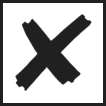 |
| #VoteLabour on 4th May |
Polling Day is Thursday 4 May 2017
Polling stations open at 7am and close at 10pm. Use your vote - #VoteLabour for a society that works for everyone not just the privileged and richest few.